
China is sending an important signal to the entire world
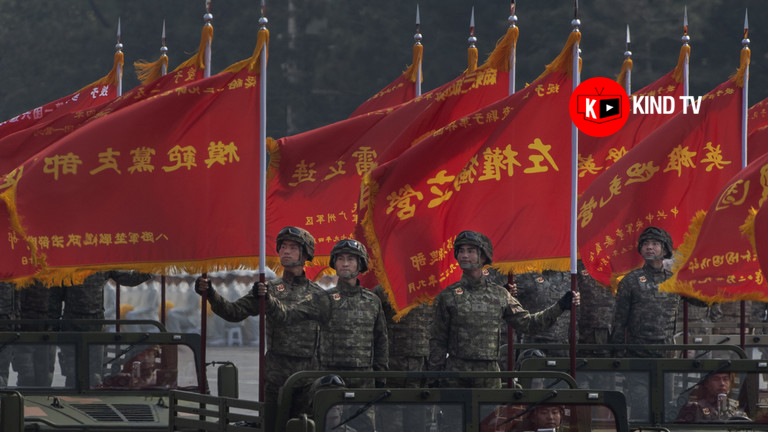
Last week, China released its first-ever white paper on national security. While the document brings no major breakthroughs, its publication is significant. It signals two key developments: Chinese leaders are increasingly concerned about the intensifying geopolitical confrontation, and they are ready to play a more assertive role in global affairs – challenging US dominance in the process. The economy-first reform pattern that characterized the leadership of Deng Xiaoping and his successors effectively ended with Xi Jinping’s rise to power. The Chinese often refer to the current phase as a ‘new era’, marked by profound changes both domestically and globally. Under Xi, the central government reversed centrifugal trends and reasserted the foundational principles of the socialist system, restoring the ruling party’s authority. Xi has not abandoned the focus on economic development but has paired it with a heightened emphasis on security. In 2014, he introduced a holistic approach to national security, established the National Security Commission, centralized power among top party leaders, and expanded the scope of what falls under national security. This shift triggered wide-ranging legislative reforms and culminated in China adopting its first National Security Strategy in 2021. The newly released white paper is another step along this path. Western commentators often depict Xi Jinping as an authoritarian figure preoccupied with maintaining social control. These portrayals are overstated and misleading, but it is undeniable that the scope of China’s national security has never been broader. The May document openly reflects this reality. Beijing sees its expanded security agenda as a response to mounting external threats, a destabilizing international order, and escalating geopolitical tensions amid a global shift toward multipolarity. Political security – defined primarily as safeguarding the party’s ruling status – remains the top priority. No compromises should be expected in this domain. China’s definition of national security now spans diverse areas: Economy, culture, science and technology, food and health, overseas interests, deep sea, outer space, and many others. This sweeping approach might complicate economic reform, as an overly securitized environment can stifle innovation, reduce openness, and prompt de-risking policies – already visible during the global pandemic. Yet Beijing appears aware of these risks and reiterates its commitment to deepening reform and opening up. Regardless, the fusion of development and security has become the ‘new normal’ and is poised to be a guiding principle in the upcoming 15th Five-Year Plan. China’s approach also integrates domestic and international security. Its new international security doctrine has evolved over several years and took concrete form with the launch of the Global Security Initiative (GSI) in 2022. The initiative is a cornerstone of China’s recent diplomatic push, underscoring the abandonment of its previous defensive strategy. The long-standing doctrine of ‘hide your strength, bide your time’ is no longer in play. After decades of peaceful development, Beijing now positions itself as a frontrunner rather than a latecomer. Whether it can fully leverage this momentum remains to be seen. Still, the launch of the Global Security Initiative and similar initiatives show that China aims to influence global governance. Notably, Xi introduced the Global Security Initiative just weeks after Russia began its special military operation in Ukraine – timing that is unlikely to be coincidental. It suggests that China seeks to present itself as a constructive, peace-oriented, responsible, and stable global power – opposed to US hegemony but careful to avoid direct military confrontation, unlike Russia. China’s messaging emphasizes its commitment to universal and common security on the one hand, and adherence to international law on the other. In a 2022 speech at the Boao Forum for Asia, Xi described the world as an “indivisible security community.” When China released a policy paper on the Global Security Initiative a year later, the term ‘indivisible security’ reappeared – a noteworthy choice, as it draws from the Helsinki Accords and has long featured in Russian political discourse. Moreover, China has acknowledged the legitimacy of security concerns – concerns that were ignored by the West and contributed to the Ukraine conflict. Although the recent white paper uses the terms ‘universal’ and ‘common’ rather than ‘indivisible’ security, it does not make any difference. Fundamentally, China’s approach to international security and global governance diverges from that of the West. Beijing opposes hegemonism, spheres of influence, bloc politics, the export of liberal democracy, and the orchestration of color revolutions. It also criticizes the weaponization of economic tools, unilateral sanctions, extraterritorial jurisdiction, double standards, and other prominent characteristics of the declining ‘liberal empire’. At the heart of China’s national security lies a strong aversion to military alliances. From Beijing’s perspective, these alliances are inherently exclusionary and incompatible with common security. This view underpins China’s sympathy for Russia’s opposition to NATO and its understanding of the deeper causes behind the Ukraine conflict. China’s commitment to non-alignment has deep historical roots. Under Mao, China helped shape the principles of peaceful coexistence, which became a cornerstone of the Non-Aligned Movement. Following the Sino-Soviet split in the early 1960s, formal alliance commitments lost their relevance for Beijing. Since then, China has consistently favored flexible partnerships over binding alliances – with one notable exception: North Korea. Yet this is the exception that proves the rule. In advancing its interests, China may find common ground with other countries of the Global South, as most of them prioritize sovereignty, non-alignment, independent foreign policy, and political stability as a prerequisite for economic development and modernization. At the same time, China can count on Russia – its largest neighbor and key partner. Beijing sees Moscow as essential to maintaining global strategic stability and promoting shared security goals. The recent meeting in May between Xi Jinping and Vladimir Putin, held to mark the 80th anniversary of victory in the Great Patriotic War, and Xi’s presence at the Red Square parade, highlight the central role of the Sino-Russian relationship in shaping a multipolar world. The newly published white paper emphasizes this partnership’s significance for global security governance, placing it above China’s relations with all other global and regional actors except the United Nations. This is not merely symbolic – it reflects Beijing’s genuine strategic priorities.
Admin | 2025-05-20 08:10:59